Client Profile
Industry:Wedding Event Management
Location: Kerala (Local & Regional Reach) and NRI audience as well
Services Delivered: Website Redesign, SEO Migration, Technical SEO
Objective: Recover stagnant organic traffic and reverse declining leads.
Background
The client is an established event management company in Kerala that had been investing in SEO intermittently for nearly a decade. Over time, results began to plateau. Initial gains from earlier SEO efforts slowly faded, and the website reached a growth ceiling.
Key challenges observed:
- Website traffic dropped and then remained stagnant for a prolonged period
- Organic leads showed a slow but steady decline
- Rankings fluctuated and were inconsistent across core service keywords
- User engagement metrics (bounce rate, time on site) indicated poor experience
From the client’s perspective, the assumption was simple:
“SEO isn’t working anymore.”
However, a deeper audit revealed that the problem was not SEO effort it was the platform on which SEO was being executed.
Problem Statement
The real issue was not SEO execution it was the website foundation.
The existing website suffered from significant technical and structural debt:
- Over 10 years old in architecture and codebase
- Slow to load across devices, especially mobile
- Not built with a mobile-first approach
- Poorly structured for modern search engine crawling and indexing
- Content and UX designed for outdated user behaviour patterns
This meant every SEO activity was working against limitations of the website itself.
No matter how much optimisation was done, the foundation capped performance and growth.
Strategy & Implementation
To break the growth ceiling, we focused on rebuilding the foundation first and then migrating SEO safely.
1. Website Rebuild (Mobile-First & Performance Optimised)
We redesigned the website with modern UX and SEO principles:
- Developed a fast-loading, mobile-first website
- Improved page speed, layout stability, and navigation clarity
- Designed conversion-focused layouts aligned with lead generation goals
- Structured content to guide users from awareness to enquiry
2. Site Structure & Crawl Optimisation
To improve discoverability and indexing:
- Created a clear page hierarchy based on service intent
- Improved internal linking between service, location, and informational pages
- Implemented SEO-friendly URL structures
- Cleaned up redundant and thin pages
3. Keyword & On-Page SEO Optimisation
We aligned content with high-intent search behaviour:
- Targeted competitive, conversion-focused service keywords
- Optimised core service and location pages
- Improved metadata, headings, internal anchors, and topical relevance
- Refined content to match modern search intent and user expectations
4. SEO-Safe Website Migration
To protect existing rankings and authority during relaunch:
- Implemented clean, consistent URL architecture
- Set up proper 301 redirects for all important legacy URLs
- Preserved SEO equity from older indexed pages
- Minimized ranking volatility and traffic loss during migration
Results
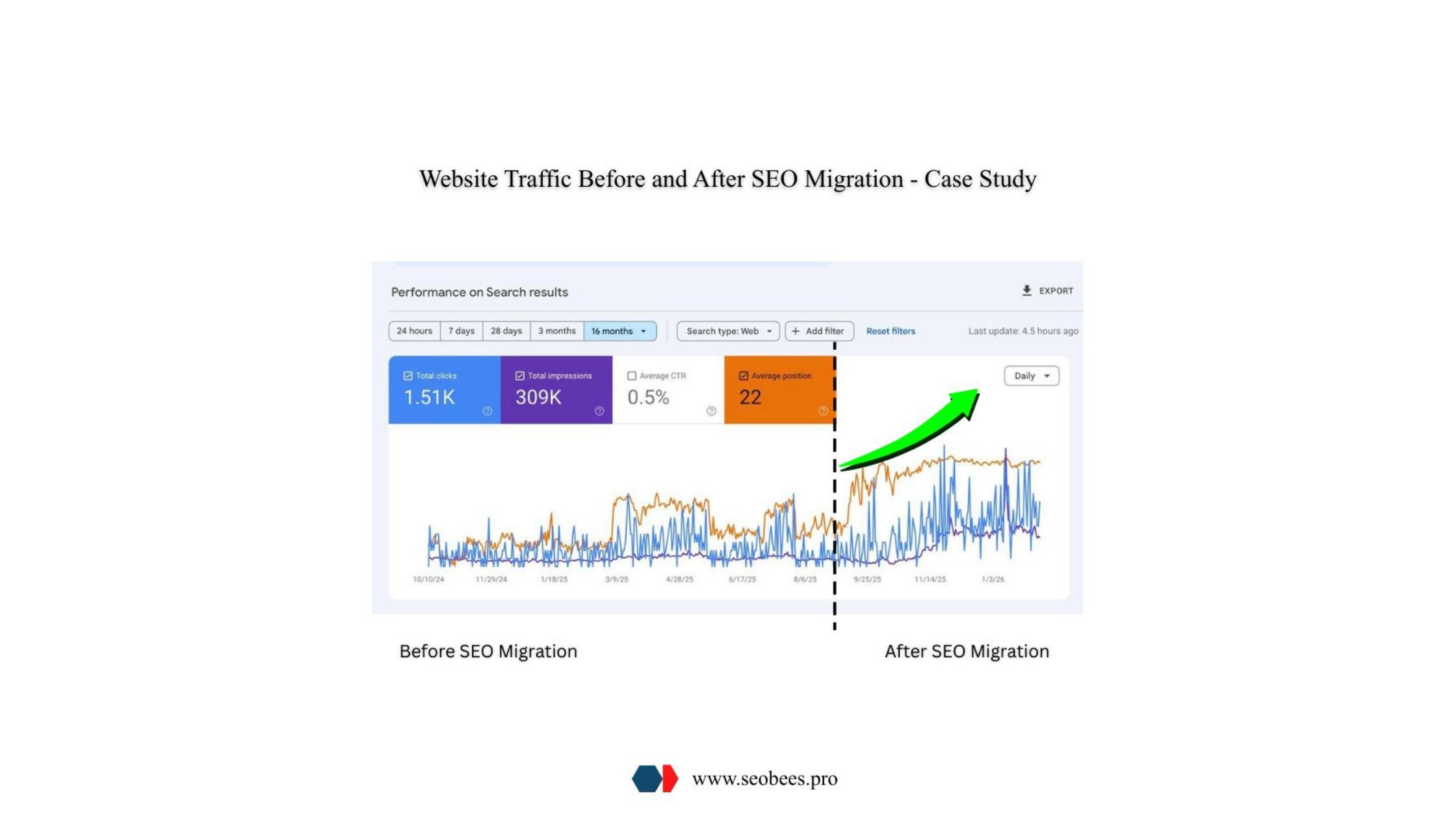
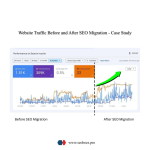
After the new website went live, organic performance began to recover in a healthy, sustainable pattern.
Phase 1: Growth in Impressions
Search impressions increased first.
This indicated that Google was re-evaluating the website structure and testing the new pages for broader keyword visibility.
Phase 2: Growth in Clicks
As rankings stabilised, organic clicks started increasing month over month.
This confirmed improved relevance, visibility, and user engagement.
Impact
- Increased visibility for both local and broader search terms
- Improved engagement metrics and reduced bounce rate
- 39% increase in organic leads since website relaunch
- More stable growth pattern instead of short-term traffic spikes
- Improved lead quality due to better intent matching
Key Learnings
- SEO performance is limited by website quality
- A weak technical foundation caps growth, regardless of effort
- Website UX, structure, and performance are now core ranking factors
- Rebuilding the website with SEO in mind unlocked growth that years of fragmented SEO could not achieve.
Conclusion
This case study highlights a common growth bottleneck for long-running businesses:
SEO alone cannot scale results when the website foundation is outdated.
A fast, mobile-first website combined with a clean SEO migration revived stagnant traffic, restored lead growth, and created a scalable platform for long-term organic acquisition.
Want Similar Results?
If your website traffic has plateaued or leads are declining, your website foundation may be the real bottleneck.
👉 Read our another blog: A Complete Digital Marketing Approach for Sustainable Business Expansion



Leave a Reply